









If you live in Dubai, you already know which line on the DEWA bill hurts the most in August. Cooling is not a small part of household energy here. Research firm Ken Research, in its October 2026 study of the UAE connected thermostat market, cites air conditioning as roughly 60 to 70 percent of electricity use in UAE buildings. That single number explains why a thermostat is often the first smart device our customers ask about, and why it usually pays for itself faster here than it would in London or Toronto.
This guide walks through where the savings actually come from, what is realistic for a villa or an apartment, and the setup mistakes we see most often when we are called in to fix someone else's installation.
Short answer: how much can a smart thermostat save in Dubai?
For most homes we work on, the savings come from three habits the thermostat enforces for you: not cooling empty rooms, not overcooling at night, and not fighting the sun in the afternoon. A household that already manages its AC carefully will see a modest drop. A household where the AC runs at 20 degrees all day in every room, whether anyone is home or not, can see a much larger one. We do not promise a fixed percentage, because the result depends on insulation, glazing, the age of the AC system and how the family lives. What we can promise is that you will finally see where the energy goes.
Why cooling costs climb so quickly here
DEWA bills residential electricity in slabs, so the price per kilowatt hour rises as your monthly consumption rises, and a fuel surcharge is added on top. In practice that means the last few hundred kilowatt hours of a summer month are the most expensive ones you buy. Cutting consumption at the top of the curve saves more than the same cut in January. Check the current slab rates on the DEWA website before you do your own maths, as tariffs and surcharges are reviewed from time to time.
The second factor is the length of the cooling season. In much of the UAE the AC works hard from April to October, and many villas never switch it off fully even in winter. A device that trims a little every day across seven or eight months adds up to a meaningful figure.
Where the savings really come from
1. Scheduling around how your family actually lives
The simplest win is a schedule. If the house is empty from 7:30 in the morning until 4 in the afternoon on school and work days, there is no reason to hold it at 21 degrees. A schedule that lets it drift up to 26 or 27 and then brings it back down 30 minutes before the first person arrives keeps the house comfortable without paying to cool furniture.
2. Presence detection instead of guesswork
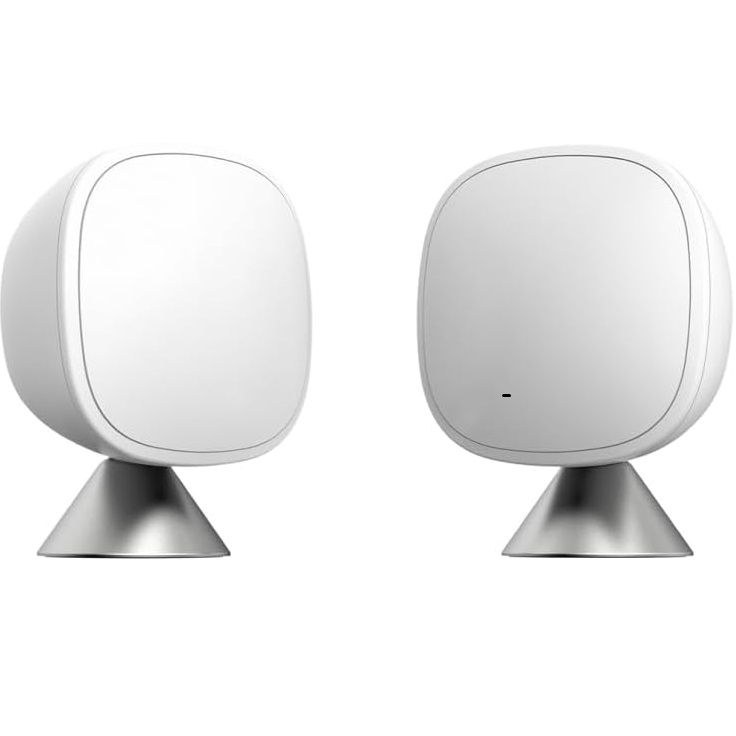
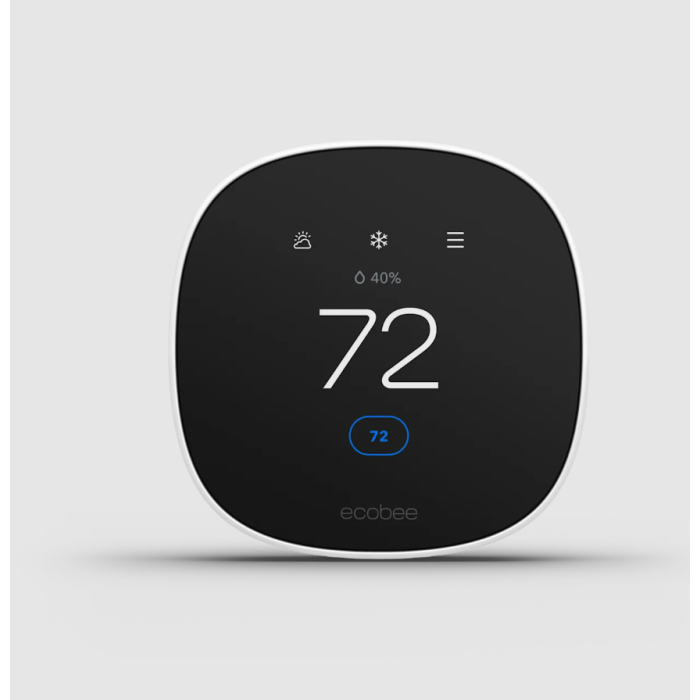
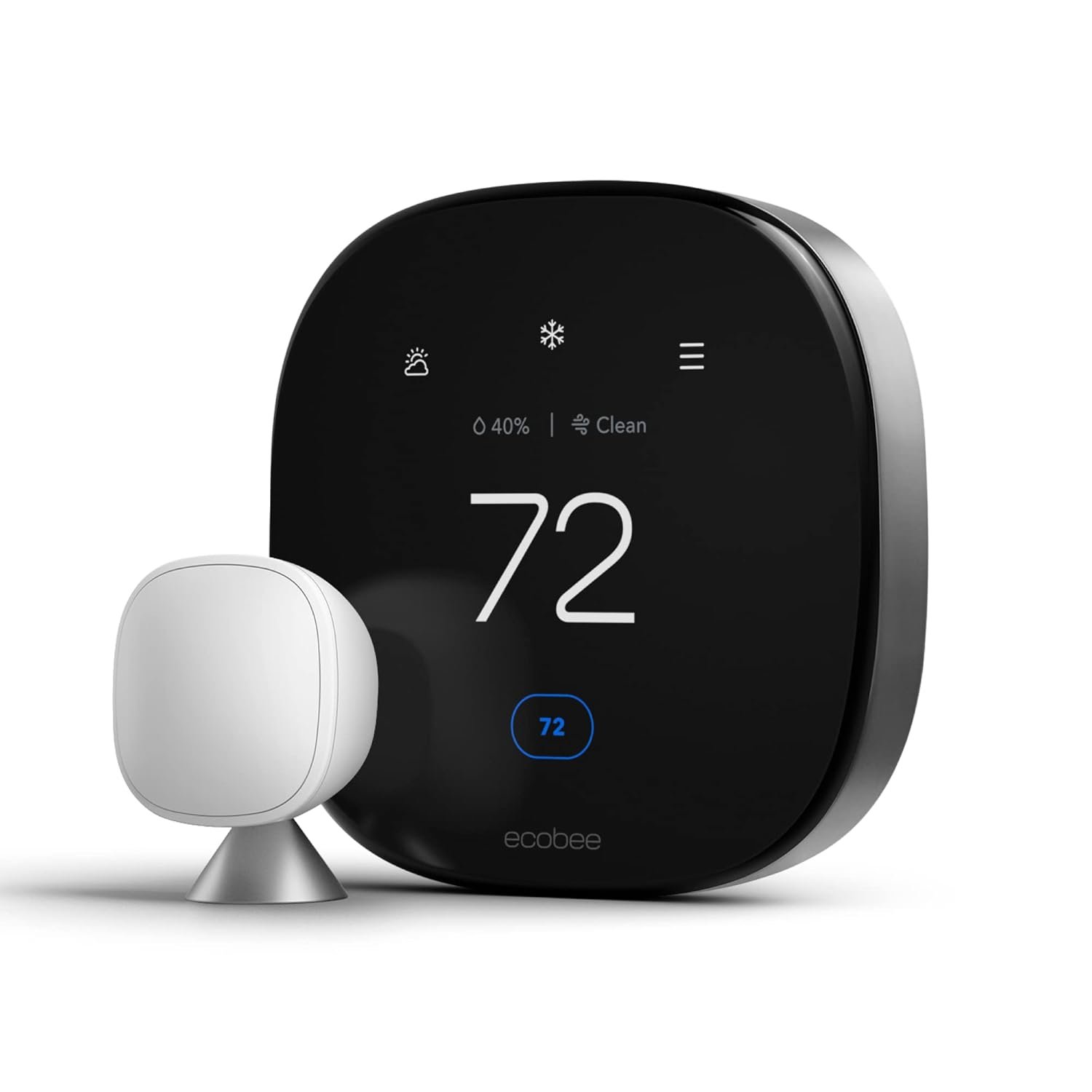
Schedules break when plans change. Thermostats like the Google Nest Learning Thermostat and the ecobee Premium use occupancy sensing and phone location to notice when everyone has left. ecobee's remote room sensors are especially useful in Dubai villas, where the majlis, the bedrooms upstairs and the kitchen can sit at very different temperatures. The thermostat can average the rooms that are occupied instead of reacting to a hallway reading near the stairs.
3. Avoiding the "set it to 18" habit
Turning the setpoint down to 18 does not cool the room faster on most systems. It only makes the compressor run longer and overshoot. A smart thermostat shows you the actual time the system needs to reach a target, which tends to cure this habit quickly.
4. Night setbacks that do not ruin sleep
Most people sleep well between 23 and 25 degrees with a ceiling fan. A gradual night schedule, rising one degree after midnight and falling again an hour before the alarm, is barely noticeable and saves cooling hours every single night of the season.
5. Seeing the data
Monthly energy reports change behaviour more than any feature. When a family sees that the guest room was cooled for 140 hours last month with nobody in it, the fix is obvious.
Villa or apartment: what changes
Villas usually have ducted split systems or several independent units, often from Daikin, Carrier, York or Mitsubishi. Each zone can take its own thermostat, and that is where the biggest savings sit, because you can treat upstairs and downstairs differently through the day.
Apartments in many Dubai towers use district cooling with a fan coil unit and a wall controller. Here, the compatibility check matters more than anything else. Some fan coil controllers use 24 volt wiring similar to North American systems, and some use proprietary control boards. A standard Nest or ecobee will not work with every one of them. In those cases a controller designed for fan coil units, or a smart relay solution, is the right choice. Always check your building's cooling provider rules too, as some towers do not allow tenants to replace the wall controller.
Compatibility checklist before you buy
- Take a clear photo of the wiring behind your current thermostat before you order anything.
- Identify your system type: ducted split, ductless split, VRF, or fan coil on district cooling.
- Check whether a common wire (often labelled C) is available, or whether the model you want has a power adapter.
- Confirm the thermostat is TDRA type approved for sale in the UAE. TDRA approval is the federal authorisation that a radio device meets UAE spectrum standards, and grey market imports sometimes skip it.
- Make sure your home WiFi reaches the thermostat location with a strong signal. A thermostat that drops offline loses its schedule intelligence.
Nest or ecobee for a Dubai home?
Both are excellent, and both are sold through our thermostat installation service. In short:
| Need | Better fit | Why |
|---|---|---|
| Several rooms with uneven temperatures | ecobee | Remote room sensors average the rooms that are actually occupied |
| You already use Google Home and Nest cameras | Google Nest | One app, shared presence detection, easy voice control |
| You want Alexa built into the wall unit | ecobee Premium | Has a built in smart speaker |
| Minimal setup, learns by itself | Google Nest Learning Thermostat | Builds a schedule from your adjustments in the first week |
Common installation mistakes we fix
The most frequent problem we see is a thermostat that was wired correctly but configured for the wrong system type, so the fan runs constantly or the compressor short cycles. The second is a thermostat mounted on a wall that gets afternoon sun or sits above a lamp, so it reads two degrees warmer than the room. The third is a weak WiFi signal in a villa with thick concrete walls. All three are easy to avoid with a proper site survey.
Setting it up for a UAE summer
Once installed, we suggest a simple starting point and then adjusting after two weeks of data:
- Home and awake: 23 to 24 degrees
- Away: 27 degrees, with presence detection turned on
- Sleep: 24 degrees, rising to 25 after midnight
- Rooms used rarely: excluded from the average, or on their own schedule
Pair this with closing blinds on west facing windows from 1 pm. If you have motorised curtains, the thermostat and curtains can be tied together in one routine so the house protects itself from the afternoon sun automatically.
Frequently asked questions
Will a smart thermostat work with my central AC in Dubai?
Most ducted and split systems used in Dubai villas are compatible with Nest or ecobee, sometimes with an adapter. District cooling fan coil units need a check first, because some use controllers that standard smart thermostats cannot drive.
Can I control the AC when I am travelling?
Yes. As long as the thermostat is online, you can change the temperature from anywhere through the app, which is useful for cooling the house before you land at DXB.
Do I need professional installation?
If you are confident with low voltage wiring and your system is standard, you can install it yourself. If you have VRF, fan coil units or several zones, a professional installation avoids damage to the AC control board and gets the configuration right the first time.
Next step
If you want a clear answer for your own home, send us a photo of your current thermostat wiring on WhatsApp and tell us whether you live in a villa or an apartment. Our team will tell you which model fits, whether you need any adapters, and what the installation involves. You can also browse our range of ecobee thermostats and Google Nest devices.